Dough
Pastry, and the cold butter rule
Keep the butter cold, handle it as little as possible, and rest it before it goes near the oven.
3 min read6 recipes practise it
Pastry has a reputation it does not deserve. There are only two ideas behind all of it, and once they make sense the recipes stop feeling like tests.
The first idea is that fat coats flour and stops gluten forming. Gluten makes bread chewy, which is exactly what you do not want in a tart case. So pastry is short, meaning crumbly and tender, in proportion to how well the fat has coated the flour and how little the dough has been worked.
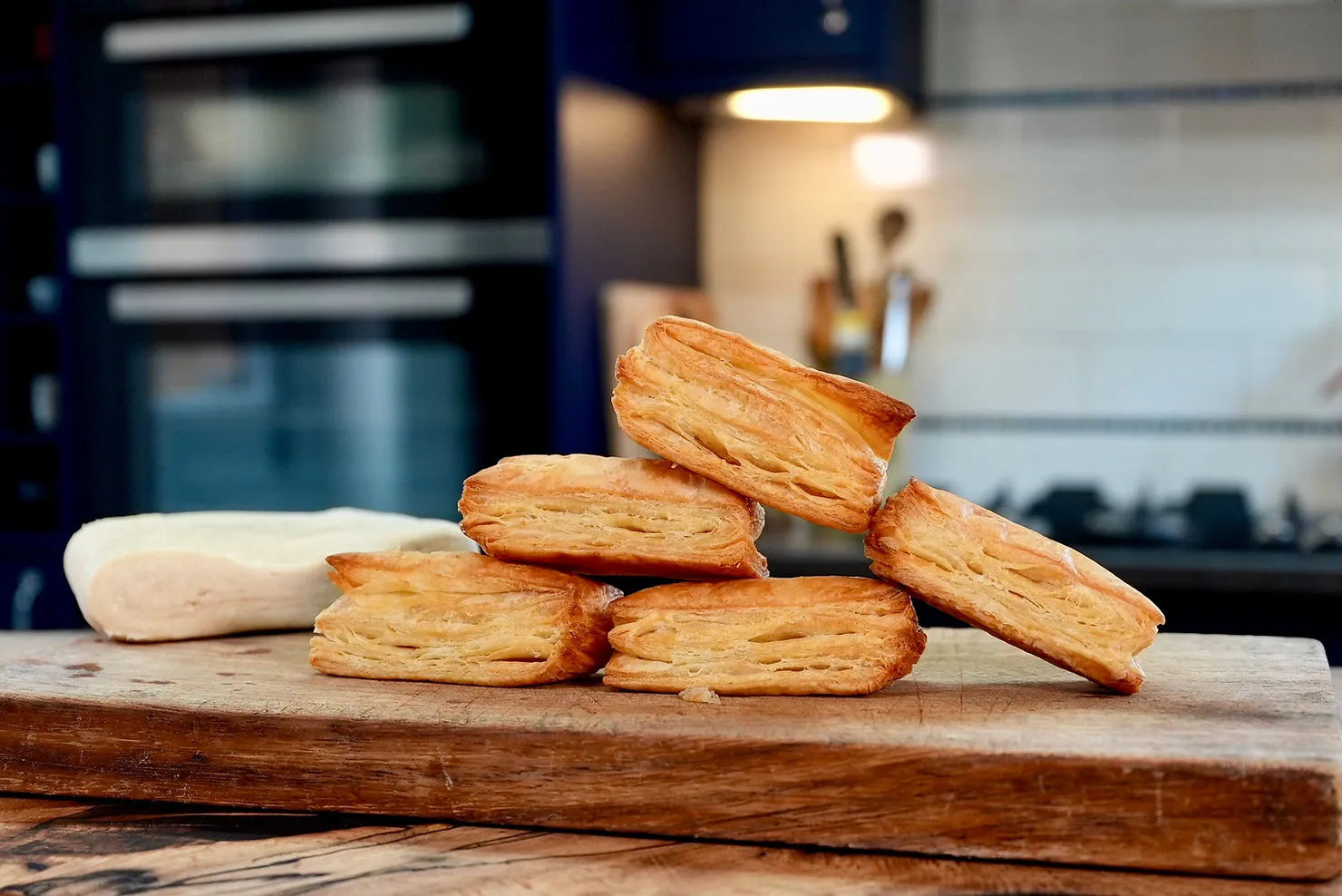
The second idea is that solid pieces of cold butter turn to steam in the oven and push the dough apart into layers. That is the whole of flaky and puff pastry. Warm butter has already merged into the flour and cannot do it, which is why every pastry recipe on this site starts with cold butter and cold hands, and why the answer to almost any pastry problem is to put it back in the fridge for 20 minutes.
For shortcrust, rub cold cubed butter into the flour with your fingertips, lifting the mixture as you go so air gets in and your hands stay off it. Stop when it looks like coarse breadcrumbs, with a few larger pieces of butter left visible. Those pieces are useful, so do not chase them. Add cold water a tablespoon at a time and bring it together with a knife, then a hand, and stop the moment it holds. A dough that has been kneaded is a dough that will be tough and will shrink.
Rest it in the fridge for at least 30 minutes, wrapped. Resting relaxes what gluten did form and firms the butter again, and it is the difference between a case that holds its shape and one that slumps down the sides of the tin.
Roll from the centre outwards, turning the pastry a quarter turn between rolls rather than turning yourself around the table. Keep the surface lightly floured. If it cracks at the edges, press them together and carry on; if it tears, patch it with a scrap and a dab of water. Nobody sees the inside of a tart case, and a patched case bakes perfectly well.
Blind baking is for anything with a wet filling. Line the case with baking paper, fill it with beans or rice, bake until the sides are set, then remove the beans and bake again until the base is dry and sandy. Brushing the hot base with a little beaten egg seals it, which is the reliable fix for a soggy bottom.
Puff pastry is the same principle taken further: a block of butter is folded into dough repeatedly to build hundreds of alternating layers. It is not difficult but it does need patience and a cold kitchen, and it needs rests between folds. If the butter starts to come through the dough, stop and chill it. Bought all-butter puff is genuinely good and there is no shame in using it on a weeknight.
Bake pastry hotter than you think, usually 200°C, so the butter turns to steam quickly rather than melting out. And expect the first one to be imperfect. A slightly patched, slightly uneven case with a good filling in it is a better result than not making a tart.
Step by step
Step 1: Keep everything cold
Cold butter straight from the fridge, cold water, cool hands. Warm butter melts into the flour instead of staying in pieces.
Step 2: Rub to coarse breadcrumbs
Fingertips only, lifting as you go. Leave a few larger pieces of butter visible; those are what make it flaky.
Step 3: Bring it together and stop
Cold water a tablespoon at a time, mixed with a knife. Stop the second it holds together. Kneaded pastry is tough pastry.
Step 4: Rest it, then roll
At least 30 minutes wrapped in the fridge before rolling, and again after lining the tin. Resting is what stops it shrinking in the oven.
Step 5: Blind bake anything with a wet filling
Paper and beans, bake until the sides set, remove and bake until the base is sandy. Brush with beaten egg to seal it.
Put it to work
Recipes that practise it
The fastest way to learn a technique is to cook something that needs it. These all do.

Stay in the loop
Get new recipes in your inbox
Occasional emails with new recipes, cooking tips and what’s new at Pinch of Mint.
See our Privacy Policy for information about how your personal data is used.