Heat
Roasting meat
High heat for colour, lower heat for the middle, and a rest that is not optional.
3 min read6 recipes practise it
Roasting is the least demanding way to cook a large piece of meat and the easiest to get slightly wrong, because everything that matters happens where you cannot see it. Two habits fix most of it: cook to temperature rather than to time, and rest the meat before you carve it.
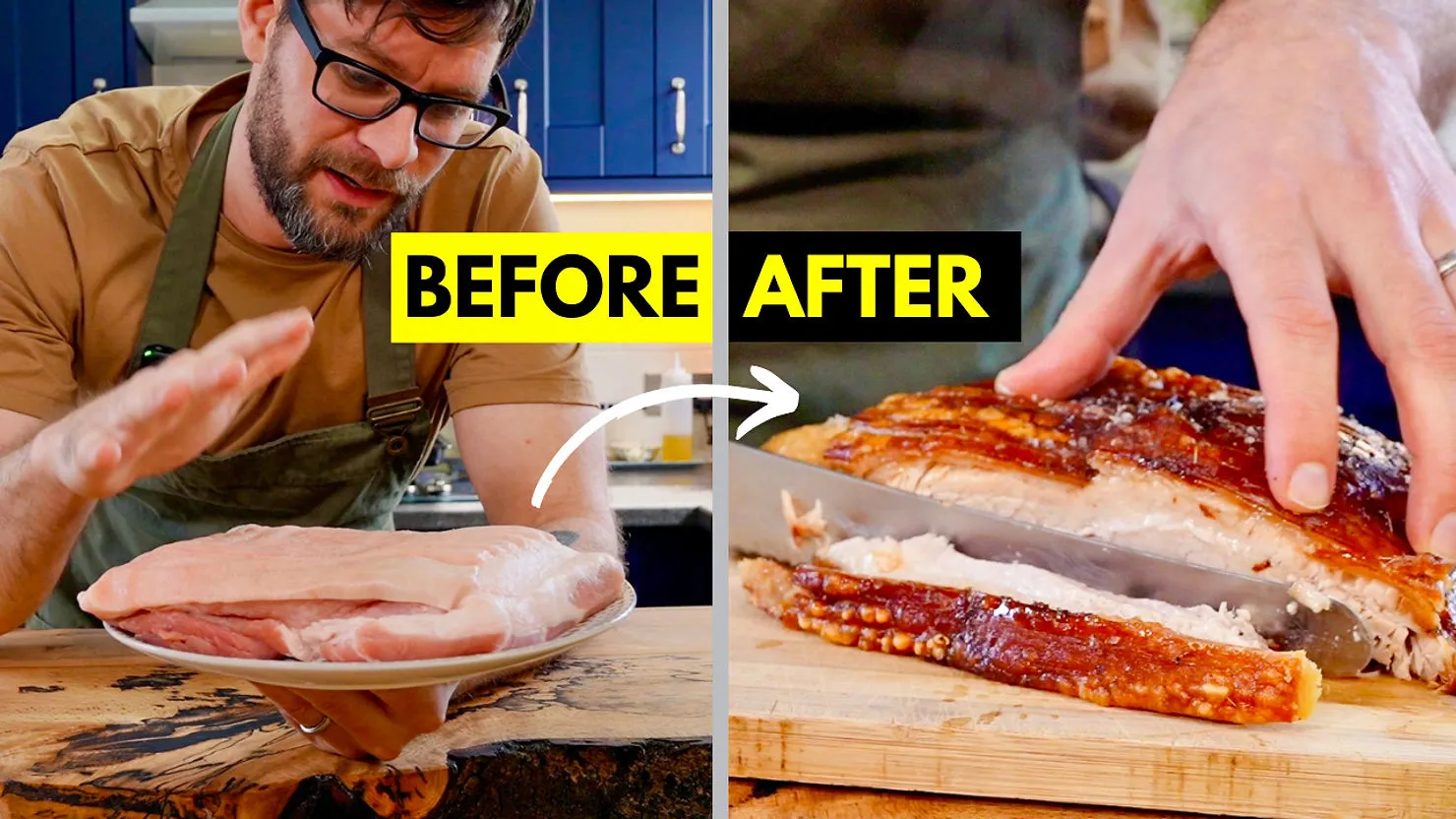
Start the day before if you can. Salt the surface of a chicken, a joint of pork or a leg of lamb, leave it uncovered in the fridge overnight, and you get two things at once: seasoning that has actually gone into the meat, and a dry skin that will crisp. If you have 30 minutes rather than 12 hours, do it for 30 minutes. It still helps.
Take the meat out of the fridge before it goes in the oven. A cold centre means the outside overcooks while the middle catches up. Twenty minutes on the counter for a chicken, an hour for a large joint.
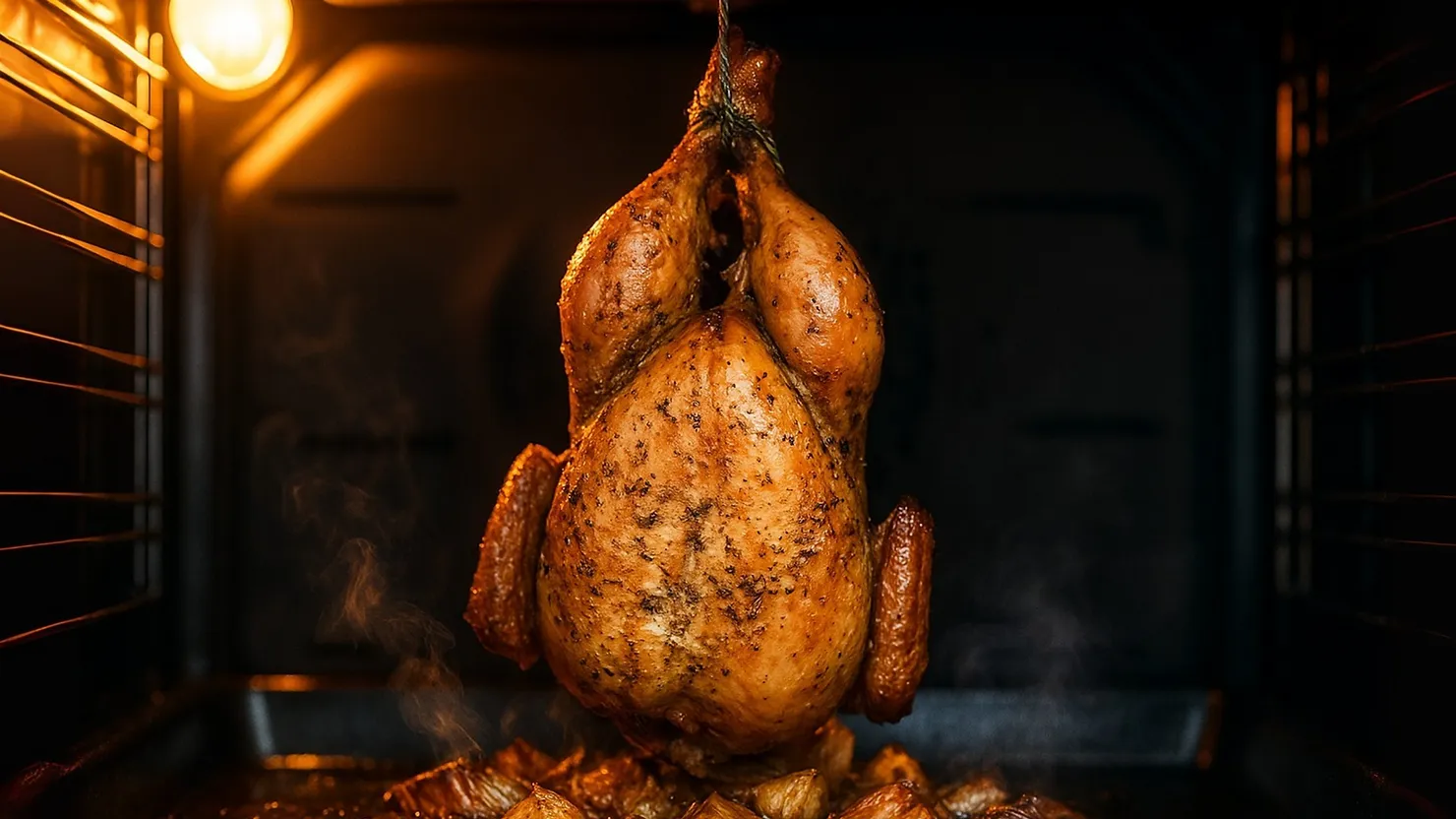
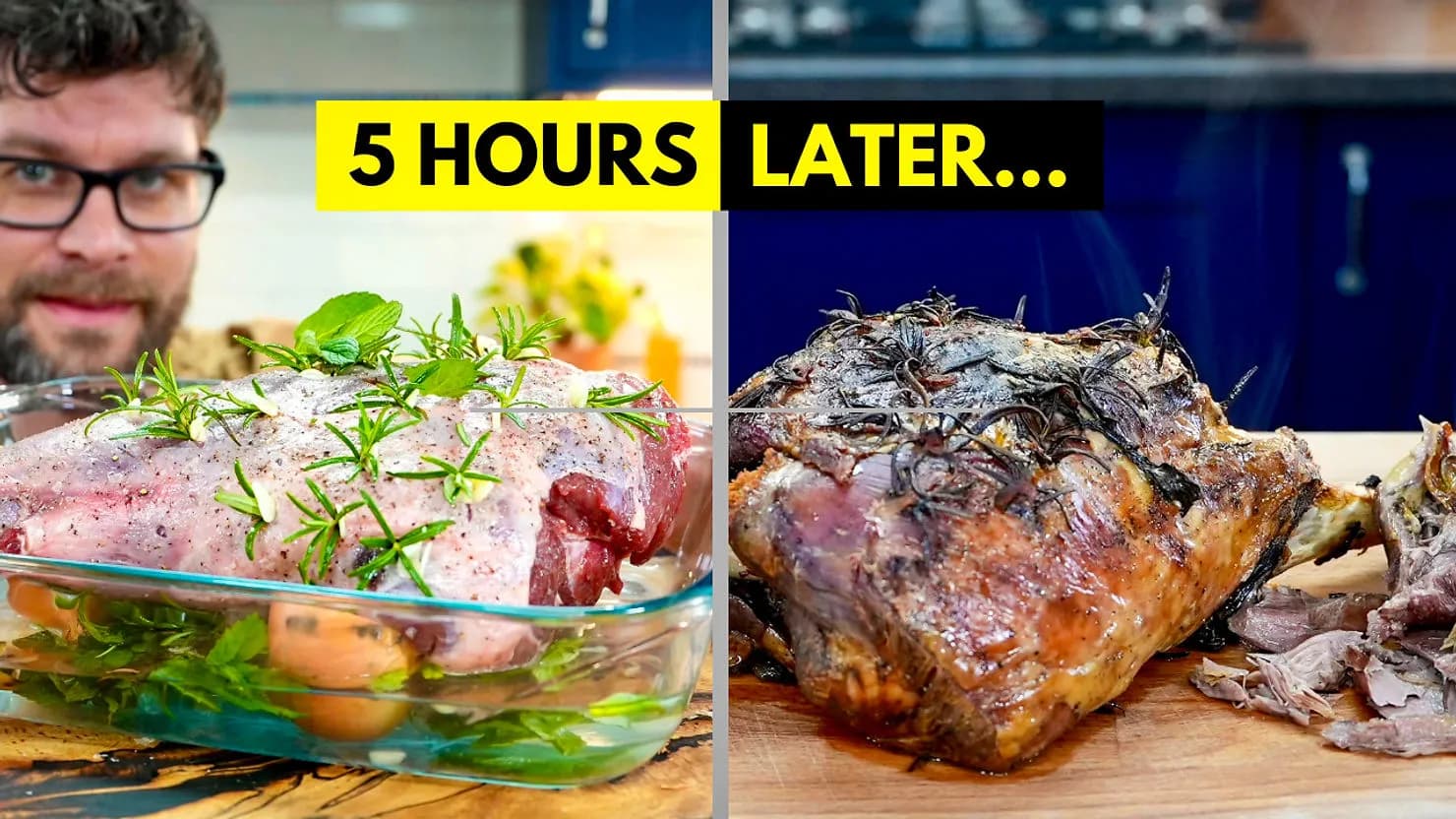
Most roasts want two temperatures. A hot start of 15 to 20 minutes at 220°C sets the colour on the outside, then you drop to 180°C to cook the inside gently. Some things want it the other way round, and slow-cooked shoulder and leg cuts want low heat for hours and no browning stage at all, because what they need is time for connective tissue to soften rather than a crust.
Weight-based timings get you close but they are only a guide. Ovens run hot and cold, joints differ in shape, and a flat piece of meat cooks faster than a thick one of the same weight. A digital probe thermometer costs very little and removes the guesswork entirely. Chicken and other poultry want 72°C to 75°C in the thickest part of the thigh, away from the bone. Pork wants 71°C. Lamb and beef depend on how you like them: 52°C rare, 57°C medium, 65°C well done, measured before resting. Without a thermometer, pierce the thickest part of a chicken thigh and look at the juices, which should run clear with no pink.
Then rest it. This is the step people skip and it makes more difference than anything else on this page. During cooking the muscle fibres tighten and push moisture towards the centre. Resting lets that redistribute, so the juices stay in the slices instead of running out onto the board. Fifteen minutes for a chicken, 20 to 30 for a large joint, loosely covered with foil. The temperature keeps climbing by a few degrees while it rests, which is why you pull it off the heat slightly early.
Rest it on a plate or a board with a lip, and keep whatever collects. That, plus the sticky brown residue in the roasting tin, is your gravy. Tip off most of the fat, put the tin over a low flame, stir in a spoonful of flour, then add stock a little at a time and scrape everything off the base.
If the skin has not crisped as much as you wanted, turn the oven up for the last 10 minutes and leave the door slightly ajar so the moisture escapes. And if it comes out slightly more done than you meant, spoon over some of the resting juices. It fixes more than you would think.
Step by step
Step 1: Salt it ahead
Season the surface and leave it uncovered in the fridge, overnight if possible. Dry skin crisps; wet skin steams.
Step 2: Bring it towards room temperature
Twenty minutes out of the fridge for a chicken, an hour for a big joint, so the outside is not overcooked by the time the centre is done.
Step 3: Hot start, then drop the heat
Fifteen to 20 minutes at 220°C for colour, then 180°C to cook through. Slow-cooked shoulder and leg cuts are the exception and want low heat throughout.
Step 4: Cook to temperature, not to the clock
Poultry 72°C to 75°C in the thigh, pork 71°C, beef and lamb 52°C to 65°C depending on how you like it. Timings by weight are a guide, not an answer.
Step 5: Rest it, then make the gravy
Fifteen minutes for a chicken, 20 to 30 for a joint, loosely covered. Use the resting juices and the residue in the tin for the gravy.
Put it to work
Recipes that practise it
The fastest way to learn a technique is to cook something that needs it. These all do.

Stay in the loop
Get new recipes in your inbox
Occasional emails with new recipes, cooking tips and what’s new at Pinch of Mint.
See our Privacy Policy for information about how your personal data is used.